
Singapore Office Carpet Monsoon Moisture Control: Preventing Mold, Fungal Spores & Musty Odors (2026 Commercial Guide)
July 30, 2026Singapore Haze Season Survival: Extracting Trapped PM2.5 Particles from Home Carpets & Soft Furnishings (2026 Technical Guide)
When seasonal transboundary haze blankets Singapore, air quality index monitors spike across heartland estates from Jurong West to Tampines. Local households instinctively seal windows, switch air purifiers to maximum flow, and run split-system air conditioners around the clock. Outdoor air quality benchmarks like the Pollutant Standards Index (PSI) and 24-hour PM2.5 concentrations dominate news cycles. Yet, an invisible indoor air pollution reservoir remains overlooked inside thousands of HDB flats and private condominiums: residential carpets and area rugs.
Soft floor coverings act as passive, horizontal depth filters. While hard flooring options like homogeneous tiles or vinyl plank allow fine particles to drift freely back into the air column with every footstep, carpet pile captures settling particulates. During high-haze episodes, fine combustion soot, pyrogenic tars, and microscopic airborne debris penetrate deep into carpet backings. Understanding the physics of PM2.5 entrapment—and the technical limits of standard household vacuuming—is essential for Singapore homeowners seeking to maintain pristine indoor air quality during severe haze conditions.
The Physics of Transboundary Haze: Carpets as Secondary Particulate Sinks
Transboundary haze affecting Singapore originates primarily from agricultural peatland fires and biomass combustion across the region. Unlike coarse windblown road dust or skin flakes, haze particulate matter consists overwhelmingly of fine particles measuring 2.5 micrometers or smaller in aerodynamic diameter (PM2.5), alongside ultrafine fraction particles below 0.1 micrometers (PM0.1). Chemical analysis reveals these micro-particulates are composed of elemental carbon cores coated with condensed polycyclic aromatic hydrocarbons (PAHs), sulfates, nitrates, organic acids, and trace heavy metals.
When haze-laden air enters a residential unit through window gaps, balcony sliders, or door tracks during ventilation cycles, these microscopic particles undergo two primary settling mechanisms inside living spaces:
- Gravitational Sedimentation: Particles larger than 1 micrometer settle out of still air under gravity, dropping onto horizontal surfaces within 2 to 6 hours of entering an enclosed room.
- Brownian Diffusion & Interception: Ultrafine particles below 0.5 micrometers move erratically through air currents generated by ceiling fans and air conditioning blowers, colliding directly with exposed carpet fibers where molecular forces bind them.
Standard synthetic carpets manufactured from bulk continuous filament (BCF) nylon, polypropylene (olefin), or polyester present an enormous aggregate surface area. A typical 3-meter by 2-meter rug made of dense cut-pile construction contains millions of individual filament strands, creating an effective surface area exceeding 120 square meters. This vast physical network traps airborne PM2.5, temporarily lowering airborne particle counts in the room. However, this filter effect is not infinite. Without specialized mechanical extraction, carpets become oversaturated particulate reservoirs, re-releasing toxic soot into your family’s breathing zone whenever children play on the floor or adults walk across the room.
Why Standard HEPA Vacuuming Fails to Extract Embedded Haze Soot
A common misconception among homeowners is that running an upright or canister vacuum cleaner equipped with a High-Efficiency Particulate Air (HEPA) filter will completely remove haze residue from carpeted floors. While a sealed H13 HEPA vacuum stops fine dust from blowing out through the exhaust port, dry vacuuming alone cannot overcome the mechanical and chemical adhesion properties of transboundary haze soot trapped deep within carpet pile bases.
The failure of dry vacuuming stems from three distinct physical barriers:
1. Chemical Binder Adhesion (Aromatic Tar Coating)
Haze particles are not dry mineral dust; they carry sticky combustion resins and condensed volatile organic compounds (VOCs). These pyrogenic oils form a tacky film around individual carpet fibers, bonding PM2.5 soot to nylon and wool molecules. Dry suction airflow cannot break these chemical bonds without a liquid solvent or high-temperature surfactant intervention.
2. Capillary Trapping at the Primary Backing
Under normal foot traffic, fine micro-soot migrates down the length of the fiber shaft, settling into the junction where tufted fibers join the primary polypropylene backing. Vacuum head suction drops off exponentially with distance from the intake nozzle. Boundary layer air resistance inside dense pile structures prevents high-velocity air movement at the root level, leaving up to 85% of fine particulates lodged near the carpet backing.
3. Mechanical Disturbance and Particle Re-Suspension
Standard vacuum power-heads utilize rotating brush bars (beater bars) to agitate fibers. When these stiff nylon bristles strike dry, soot-laden carpet fibers at high speed, they physically shatter agglomerated PM2.5 clusters into individual ultrafine particles. A significant percentage of these agitated micro-particles are flung upward past the vacuum suction field, polluting indoor air before the machine can collect them.
| Cleaning Methodology | PM2.5 Removal Efficiency (%) | Pyrogenic Tar & PAH Breakdown | Pile Penetration Depth (mm) | Moisture Load & Dry Time (SG 80% RH) | Airborne Re-suspension Risk |
|---|---|---|---|---|---|
| Standard Dry HEPA Vacuuming | 22% – 35% | Zero (Dry process only) | 3mm – 6mm (Surface pile only) | 0% / Immediate dry time | High (Brushing disturbs deep soot) |
| Low-Moisture Encapsulation | 40% – 52% | Minimal (Polymers crystallize surface oil) | 6mm – 10mm (Mid-pile scope) | Low / 1.5 – 2.5 Hours | Moderate (Crystallized dust remains) |
| Rotary Disc Bonnet Shampooing | 48% – 60% | Moderate (Alkaline detergent action) | 8mm – 12mm (Spreads soil laterally) | Moderate / 4 – 6 Hours | Low (Wet capture process) |
| 400+ PSI Hot Water Hydro-Extraction | 94% – 98% | High (Thermal + Surfactant emulsification) | 18mm – 25mm (Full backing flushing) | Controlled / 3 – 5 Hours (With air-movers) | Negligible (Enclosed continuous vacuum) |
Hydro-Extraction Mechanics: Flushing Micro-Particulates From Carpet Roots
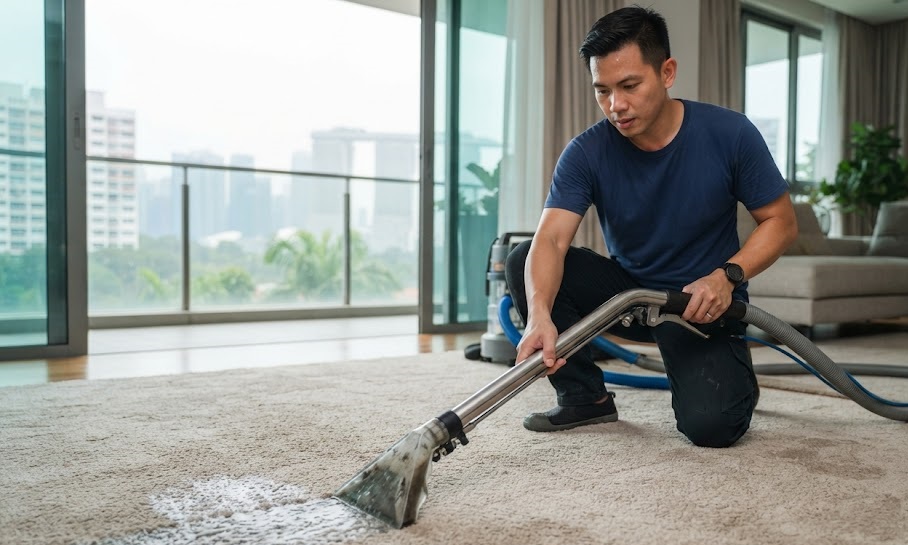
Removing oily PM2.5 haze contaminants from residential carpet pile requires high-performance physical chemistry. Professional restoration protocols utilize high-pressure hot water extraction (HWE)—often referred to as steam extraction—engineered specifically to break molecular bonds, emulsify oily smoke resins, and immediately extract the liquid slurry before moisture can migrate into floor sub-structures.
The hydro-extraction process operates across four precise physical stages:
Stage 1: Thermal Liquefaction (82°C – 93°C Water Delivery)
Pyrogenic tars and hydrocarbon resins holding PM2.5 soot to synthetic fibers undergo phase softening when exposed to elevated fluid temperatures. Injecting solution temperatures between 82°C and 93°C at the carpet face dramatically lowers the viscosity of organic binders, causing stubborn haze residues to release their grip on carpet filaments instantly.
Stage 2: Micro-Emulsification via Non-Ionic Surfactants
Standard off-the-shelf carpet detergents rely heavily on high-pH alkaline salts that leave sticky residues, attracting fresh dirt once dry. Deep haze remediation demands specialized non-ionic pre-spray formulations. These nano-surfactant molecules feature dual-ended chemical structures: a lipophilic (oil-attracting) tail that locks onto PM2.5 tar clusters, and a hydrophilic (water-attracting) head that bonds with high-temperature water jets. This breaks soot down into microscopic, suspended droplets.
Stage 3: Controlled Fluid Injection Under Pressure (400 – 500 PSI)
Water pressure must be calibrated based on pile density and backing construction. For typical Singapore residential carpets, fluid delivery at 400 to 500 pounds per square inch (PSI) creates dynamic hydraulic shear stress at the base of the carpet pile. This high-velocity fluid stream flushes trapped particles out of fiber junctions without force-feeding liquid through the secondary latex backing into floor underlayment foam.
Stage 4: High-CFM Negative Pressure Vapor Recovery
Simultaneous with fluid injection, twin high-lift vacuum motors pull airflow rates measured in cubic feet per minute (CFM) across a narrow wand aperture. This intense vacuum seal recovers up to 95% of injected fluid alongside suspended PM2.5 contaminants, transferring dirty effluent straight into recovery tanks. Homeowners interested in restoring indoor air quality can explore specialized options through professional residential deep cleaning and extraction services designed specifically for humid tropical homes.
NEA Air Quality Guidelines & Mold-Haze Synergy in High Humidity
The National Environment Agency (NEA) monitors air quality in Singapore using continuous sensing stations across North, South, East, West, and Central regions. While NEA guidelines recommend keeping 24-hour PM2.5 levels below 35 micrograms per cubic meter (µg/m³), transboundary haze events routinely push ambient readings into the Elevated or Unhealthy ranges (exceeding 55 µg/m³ to 150 µg/m³). When these micro-particulates enter Singapore residences, they interact directly with another environmental factor: tropical relative humidity (RH).
Singapore maintains an average ambient relative humidity between 70% and 90% year-round. Inside HDB flats and private apartments without continuous air conditioning, indoor RH fluctuates between 65% and 80%. This combination creates a dangerous biological catalyst inside soft floor coverings. Fine soot particles carried by haze contain organic carbon, plant wax fragments, nitrogen compounds, and trace sulfates. When these nutrient-rich micro-particles settle into moisture-laden carpet fibers, they form an ideal breeding ground for microscopic fungal spores, including Aspergillus niger, Penicillium chrysogenum, and Cladosporium.
Without deep hydro-extraction, trapped PM2.5 soot supplies the carbon substrate while ambient humidity supplies the moisture required for fungal hyphae to germinate within 48 to 72 hours. As mold colonies colonize the primary carpet backing, they release volatile organic compounds (mVOCs) and secondary allergenic spores into the air. This fungal-particle synergy explains why many Singapore families notice persistent musty smells and sudden spikes in morning allergic rhinitis during and immediately following haze season, even after outdoor air quality clears.
To prevent fungal germination following hot water hydro-extraction, indoor relative humidity must be driven below 50% for the first 3 hours post-treatment. Close all windows, set split-system air conditioning units to “Dry Mode” or 20°C with maximum fan velocity, and deploy high-CFM axial air movers pointed at a 45-degree angle across the floor. This accelerates laminar boundary evaporation, pulling residual dampness out of carpet pile before fungal spores can reactivate.
Fiber-Specific Extraction Protocols: Synthetic HDB Carpets vs. High-End Condo Wool Rugs
Executing hot water extraction requires strict technical adjustments based on carpet fiber chemistry. Applying identical temperature, pressure, and surfactant levels across different materials risks fiber damage, dye bleeding, or structural backing separation.
1. Solution Chemistry for Synthetic Fibers (Nylon, Polypropylene, Polyester)
Synthetic carpets—found widely in HDB flats, BTO living rooms, and modern rental units—exhibit high thermal and chemical tolerance. Olefin and nylon BCF fibers handle extraction temperatures up to 95°C and solution pressures up to 500 PSI. Hydrocarbon tar breakdown in synthetic pile benefits from mildly alkaline pre-sprays (pH 8.5 to 9.5) containing d-limonene additives to solubilize sticky haze resins. Following deep injection, an acidic neutralizing rinse (pH 4.5 to 5.5) must be pumped through the wand to strip alkaline residues, restoring the fiber’s natural tactile soft hand.
2. Delicate Thermal Control for Wool and Natural Fibers
High-end condominiums across Orchard, River Valley, and East Coast frequently feature hand-tufted or woven wool rugs, silk blends, or viscose area rugs. Wool fibers possess an outer cuticle layer covered in microscopic hydrophobic scales. High temperatures combined with aggressive mechanical agitation cause these scales to interlock, leading to permanent felting, shrinkage, and pile distortion. Extraction parameters for natural wool must observe strict limits:
- Maximum Water Temperature: Capped at 60°C to 65°C to preserve natural lanolin coats and prevent dye bleeding.
- Injection Pressure Limits: Reduced to 200–250 PSI to prevent fiber shredding or latex delamination in hand-tufted backings.
- pH Balancing: Pre-sprays must remain strictly within a wool-safe pH envelope of 5.5 to 8.0. High alkalinity strips protective natural oils and causes yellowing (alkaline browning) on light-colored wool pile.
Diagnostic Checklist: Identifying Severe PM2.5 Fiber Loading
Because fine particulate matter is microscopic, identifying when a carpet has transitioned from a helpful passive filter into a saturated indoor hazard requires checking physical diagnostic indicators. Assess your home flooring against the following symptoms:
1. Shading and Visual Grey-Out
Examine areas under heavy foot traffic alongside untouched carpet sections underneath sofas or low TV consoles. A distinct greyish cast across walking pathways indicates high concentrations of carbon black micro-soot locked in the upper fiber matrix.
2. Fiber Surface Tackiness
Press a clean, dry palm firmly against the carpet pile for five seconds. If your palm encounters a slight tacky resistance or leaves behind a faint grey residue on skin ridges, pyrogenic tar binders have saturated the fiber shafts.
3. Combustion Odor Under Air Conditioning
Turn on your air conditioner with room doors closed. If a faint, stale smoke scent emerges as air velocity circulates across floor surfaces, localized air currents are re-suspending volatile organic compounds trapped inside carpet backings.
4. Contact Allergy & Respiratory Triggers
If family members experience sudden sneezing fits, itchy eyes, skin hives, or morning nasal congestion specifically after sitting or laying on carpeted floors, particulate loading has exceeded safe indoor thresholds.
Frequently Asked Questions
How often should home carpets undergo deep extraction during Singapore haze season?
For homes in Singapore, scheduling a professional hot water extraction right at the midpoint or immediately following the conclusion of peak transboundary haze (typically between August and October) is highly recommended. Homes with young toddlers, elderly family members, or respiratory allergy sufferers should undergo extraction every 6 months to prevent trapped PM2.5 from compounding with tropical humidity.
Can trapped PM2.5 in carpets trigger asthma or skin flare-ups in toddlers?
Yes. Toddlers and pets spend significant time directly on floor level, placing their breathing zone within 10 to 30 centimeters of carpet fibers. Mechanical agitation from crawling disturbs trapped PM2.5 micro-particles and absorbed combustion toxins, causing localized re-suspension that can trigger asthma attacks, allergic rhinitis, and contact eczema flare-ups.
Will hot water extraction cause carpet backing to stay wet and smell musty in Singapore’s humidity?
Not when performed by trained technicians using high-CFM extraction equipment. Industrial extraction wands instantly vacuum out up to 95% of injected fluid during the cleaning pass. Combined with professional high-velocity air movers and household air conditioning set to dry mode, carpets dry completely within 3 to 5 hours, eliminating any risk of musty fungal odors.
Is dry carpet cleaning effective at removing oily transboundary haze soot?
Dry carpet cleaning methods, such as absorbent compound powder or bonnet pad cleaning, clean surface fibers but lack the hydraulic force necessary to break down sticky pyrogenic tars located deep at the carpet backing. High-pressure hot water extraction remains the gold standard for flushing micro-soot out of the root pile.
Restoring Your Home’s Primary Air Filter: Professional Extraction Services
Maintaining healthy indoor air quality during Singapore’s seasonal haze requires more than just high-grade air purifiers and closed windows. Restoring your carpets through professional thermal hydro-extraction converts saturated floor coverings back into effective, hygienic secondary air filters that protect your family year-round.
Ready to eliminate embedded PM2.5 micro-particulate pollution from your living space? Contact our BCA-trained floor care specialists today through our online service request form to schedule an in-home diagnostic evaluation and deep extraction session tailored to your carpet’s specific fiber chemistry.